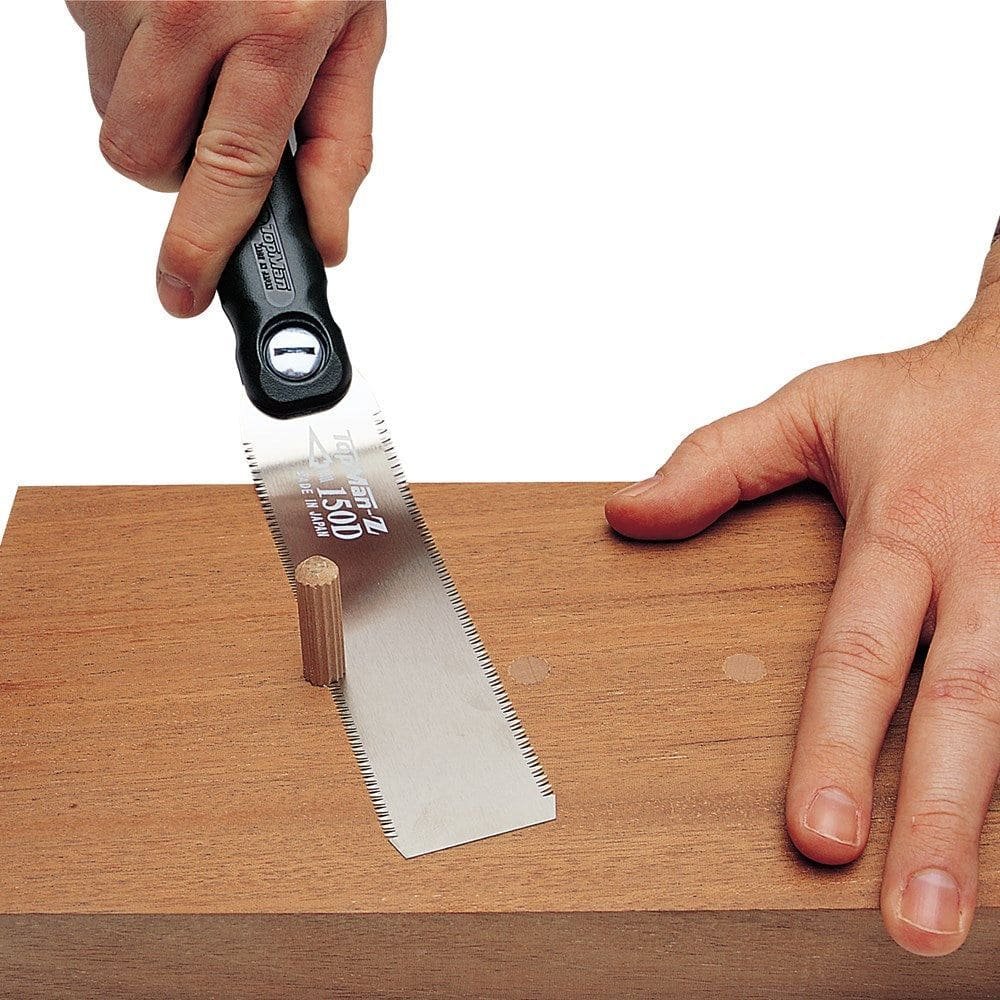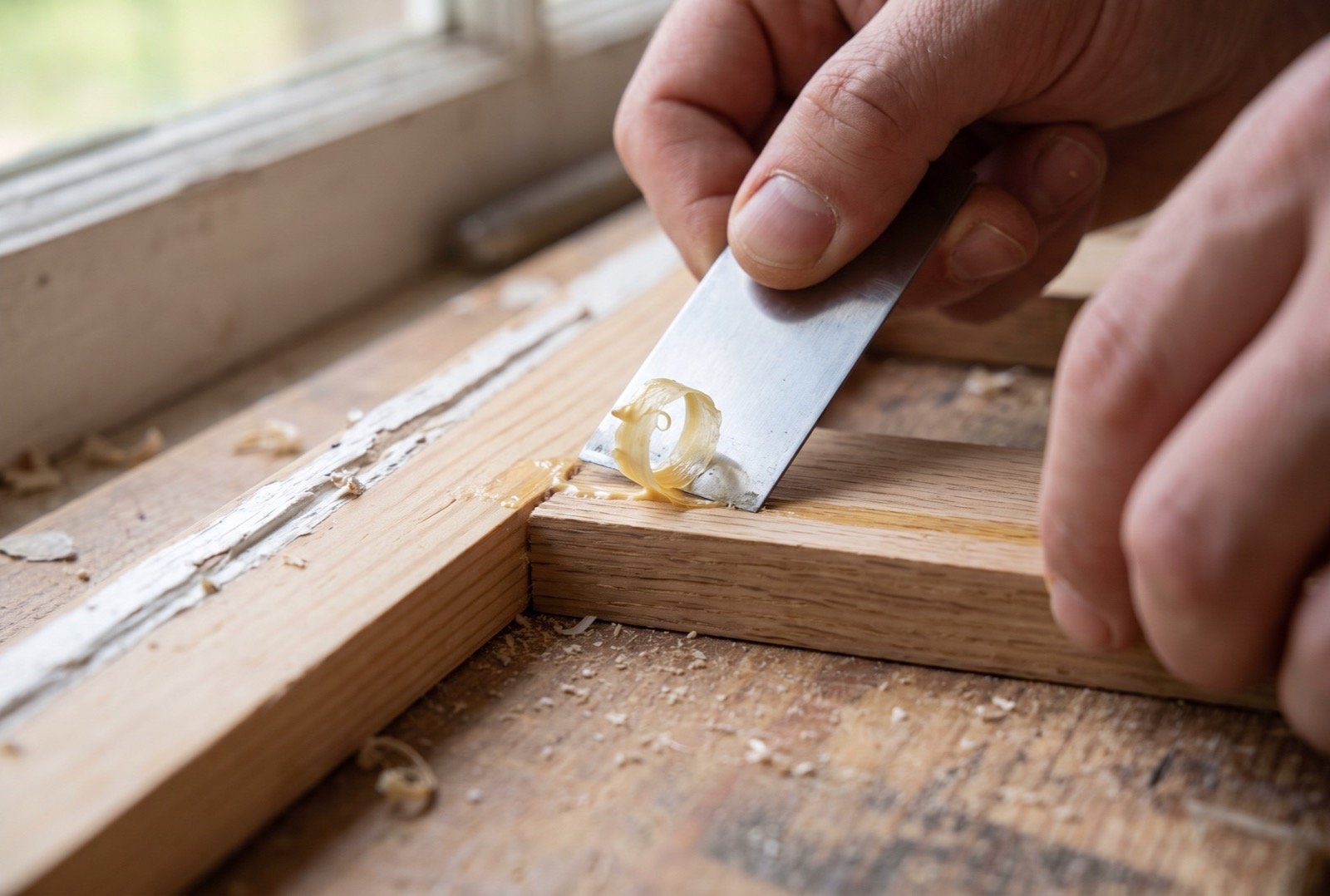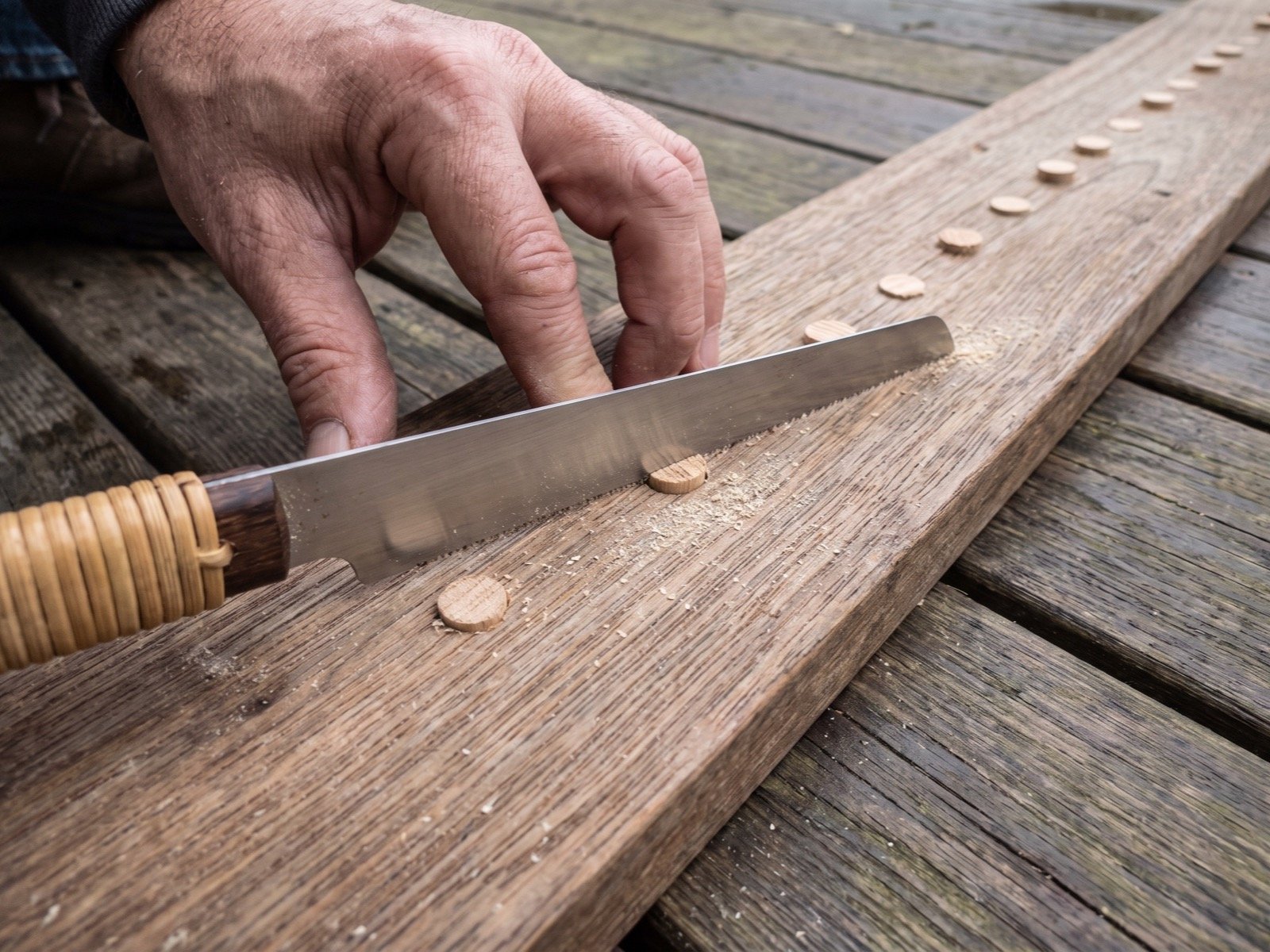
A plug or dowel standing proud of a finished face is a small job, and a circular saw will wreck it. On a flush-cut saw the teeth are set to one side only, so the flat of the blade rides on the timber and the surface around the plug stays untouched.
What it’s really for
- A timber plug over a screw that sits a millimetre or two high.
- A dowel in a chair, a gate or a repaired stile that needs trimming once the glue has gone off.
- A proud brad you’d rather cut off than punch through a finished face.
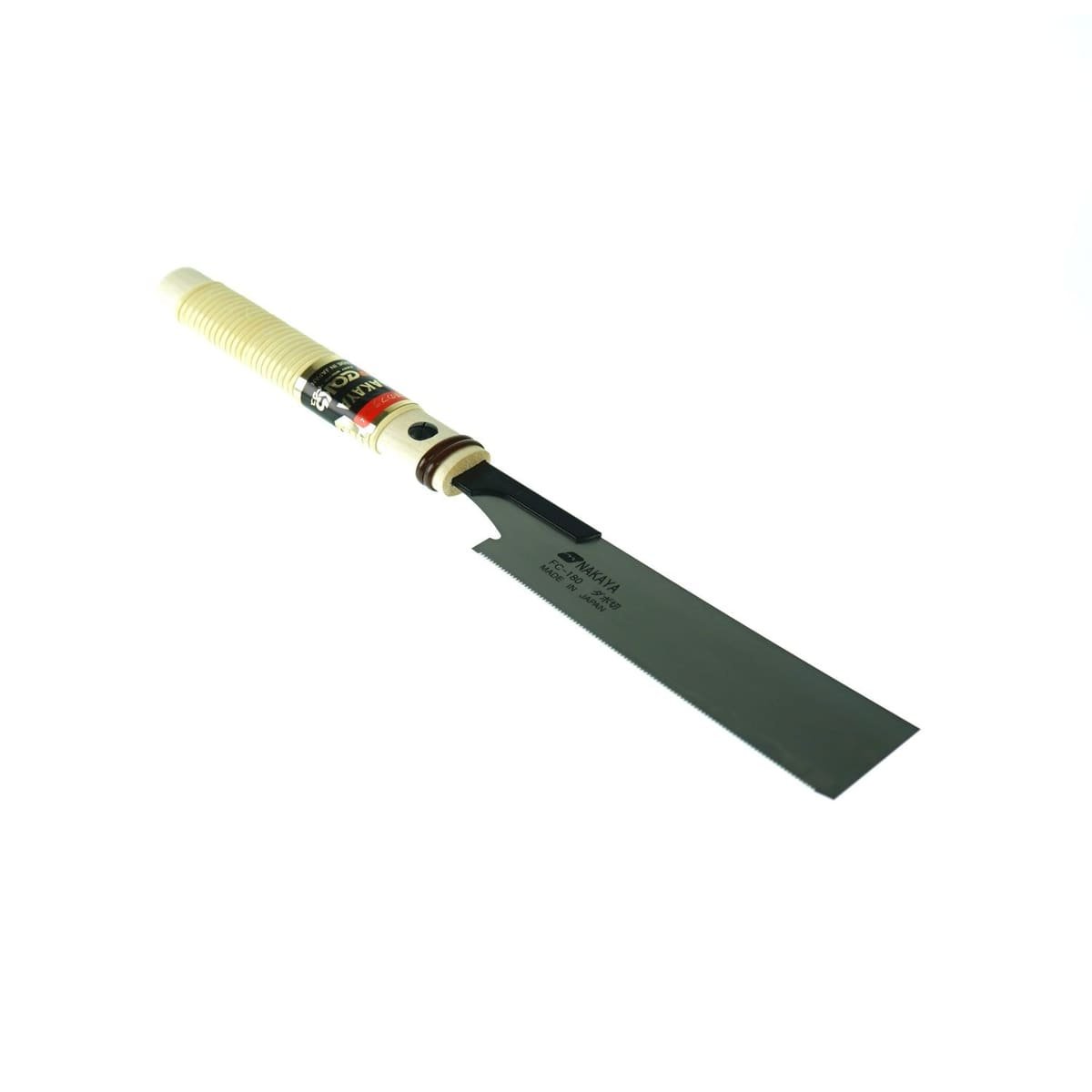
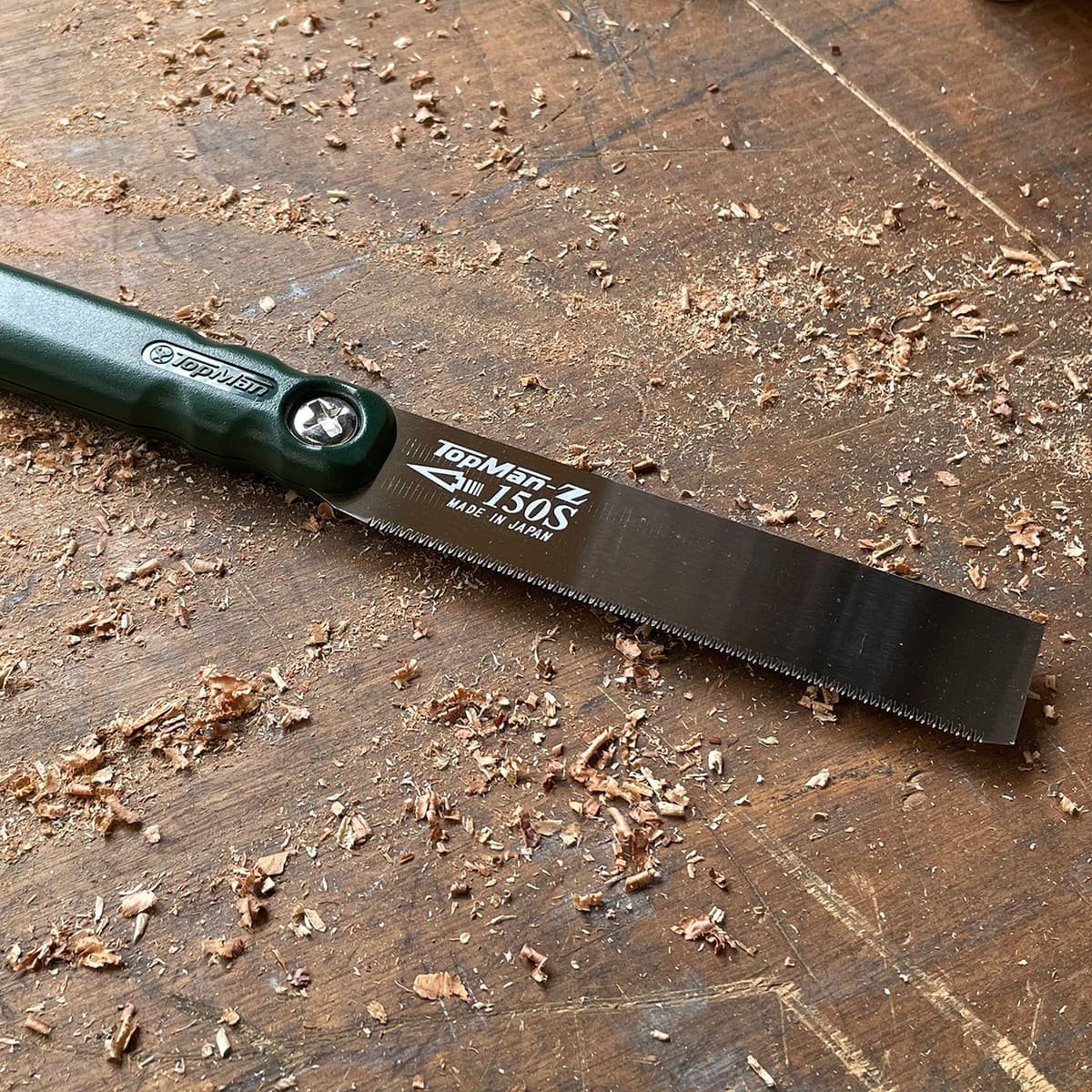
We stock the Japanese flush-cutting saw and the Nakaya Kugihiki for exactly this work. Teeth and set vary by maker, so read the card before you buy. Any warranty the maker publishes stays with the maker. Browse the range under saws.
Protect the face
- Steady the blade so it doesn’t jump on the first stroke. With a Japanese pull saw, cut on the pull.
- Stop as soon as the teeth just touch the surface. Take the last whisker with a scraper or a fine file so you don’t dig a hollow.
- On a painted architrave with an aggressive set, slip a strip of card under the blade to protect the paint.
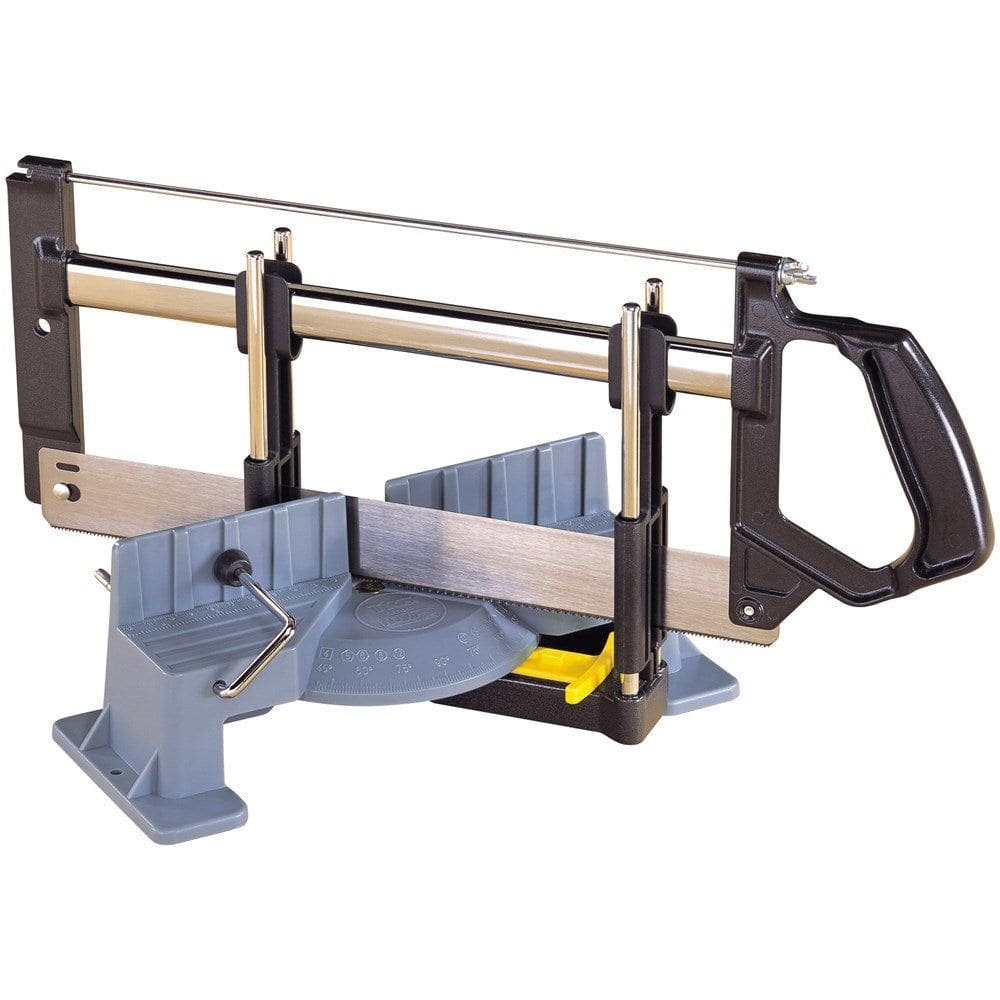
Don’t treat a flush-cut saw as a crosscut saw. It drifts in a deep cut, and its teeth clog in wet treated softwood. To cut a board to length, reach for a carpenter’s saw or a mitre box.