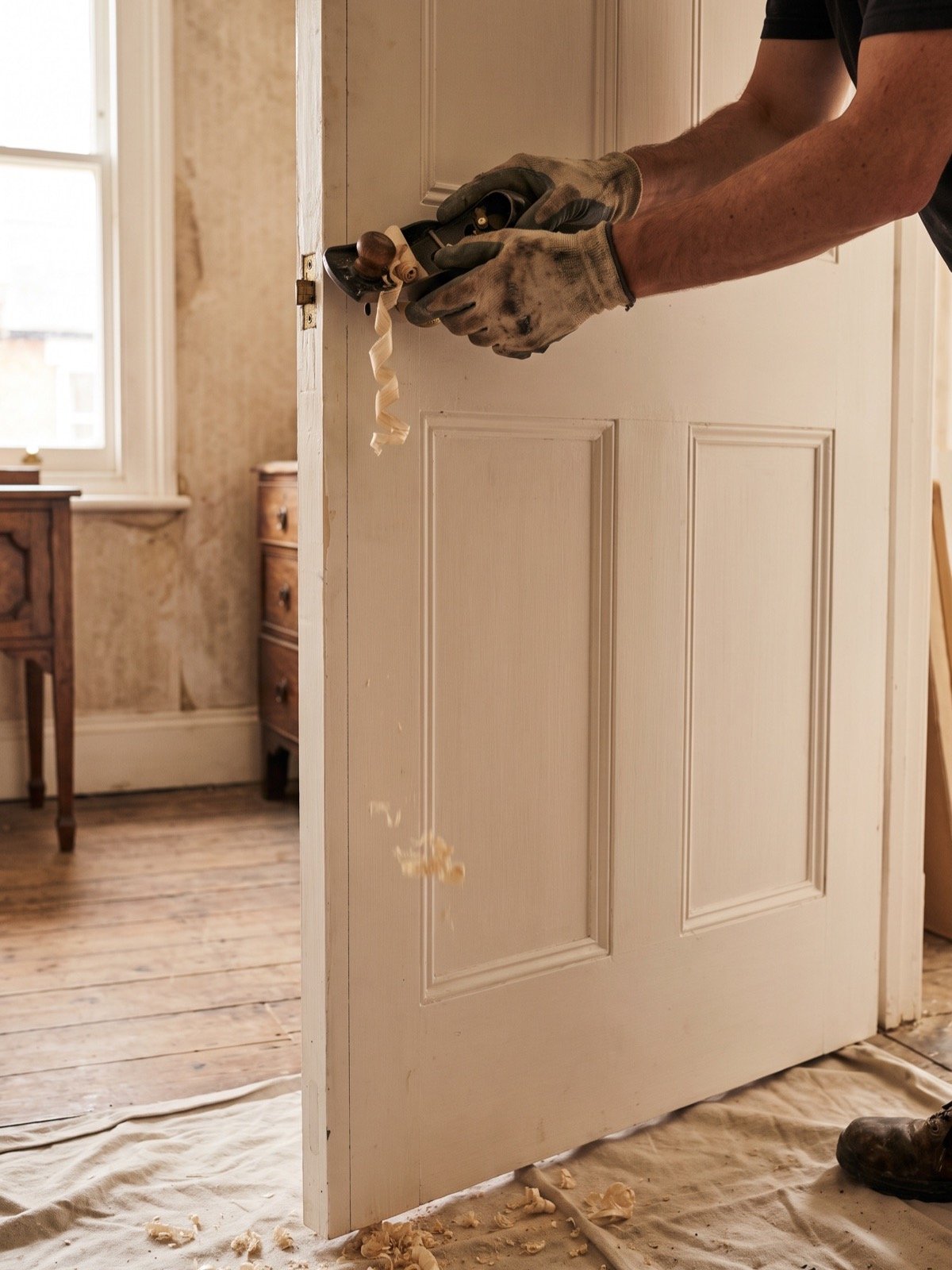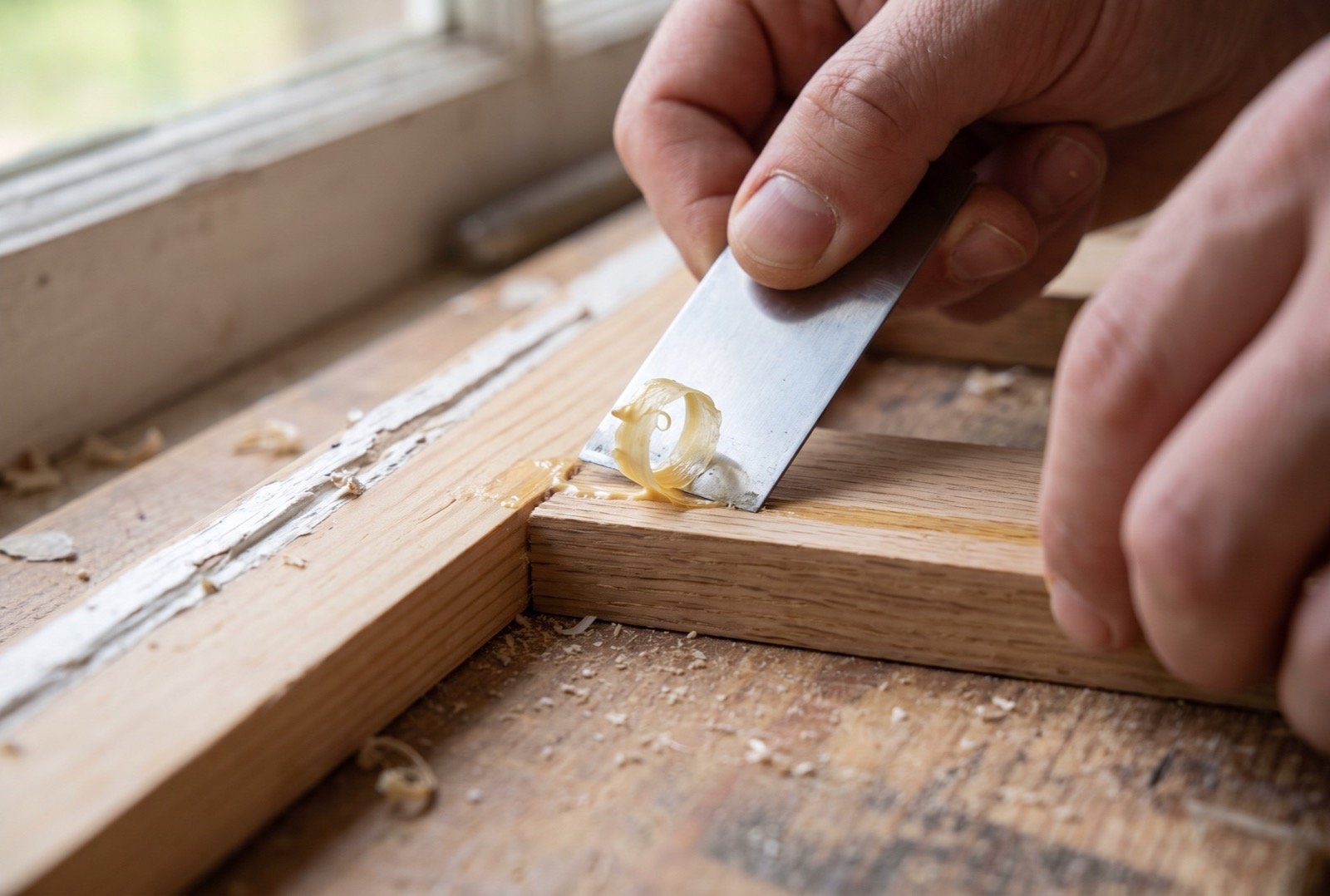
Soft pine, old enamel and glue squeezed from a joint all clog sandpaper fast. A cabinet scraper takes a thin shaving instead, so none of that dust gets pressed into the grain.
Jobs it does best
- A ridge of paint left along a skirting or architrave after a rushed cut-in.
- Glue dried proud of a joint, where sandpaper would only smear it into the pores.
- A face that has to be flat enough to take a finish, with the arris left crisp rather than rounded.
The hook does the cutting
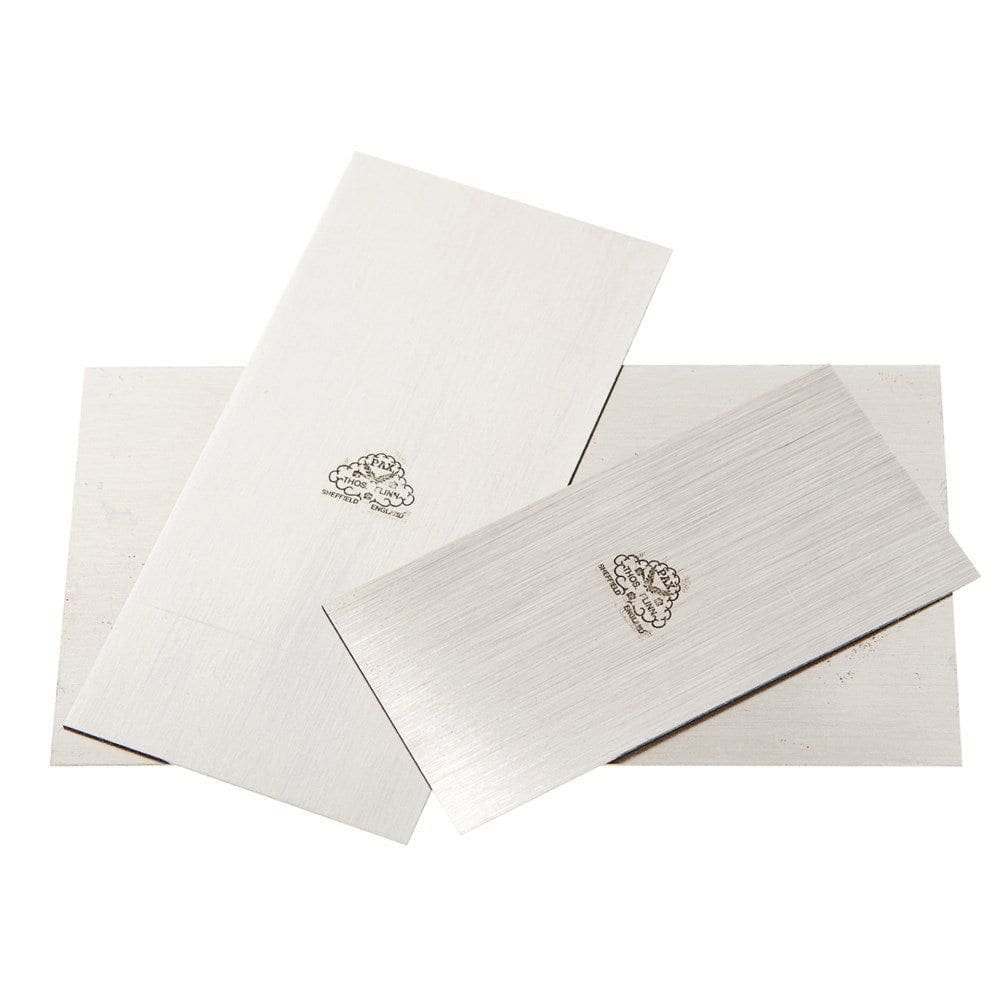
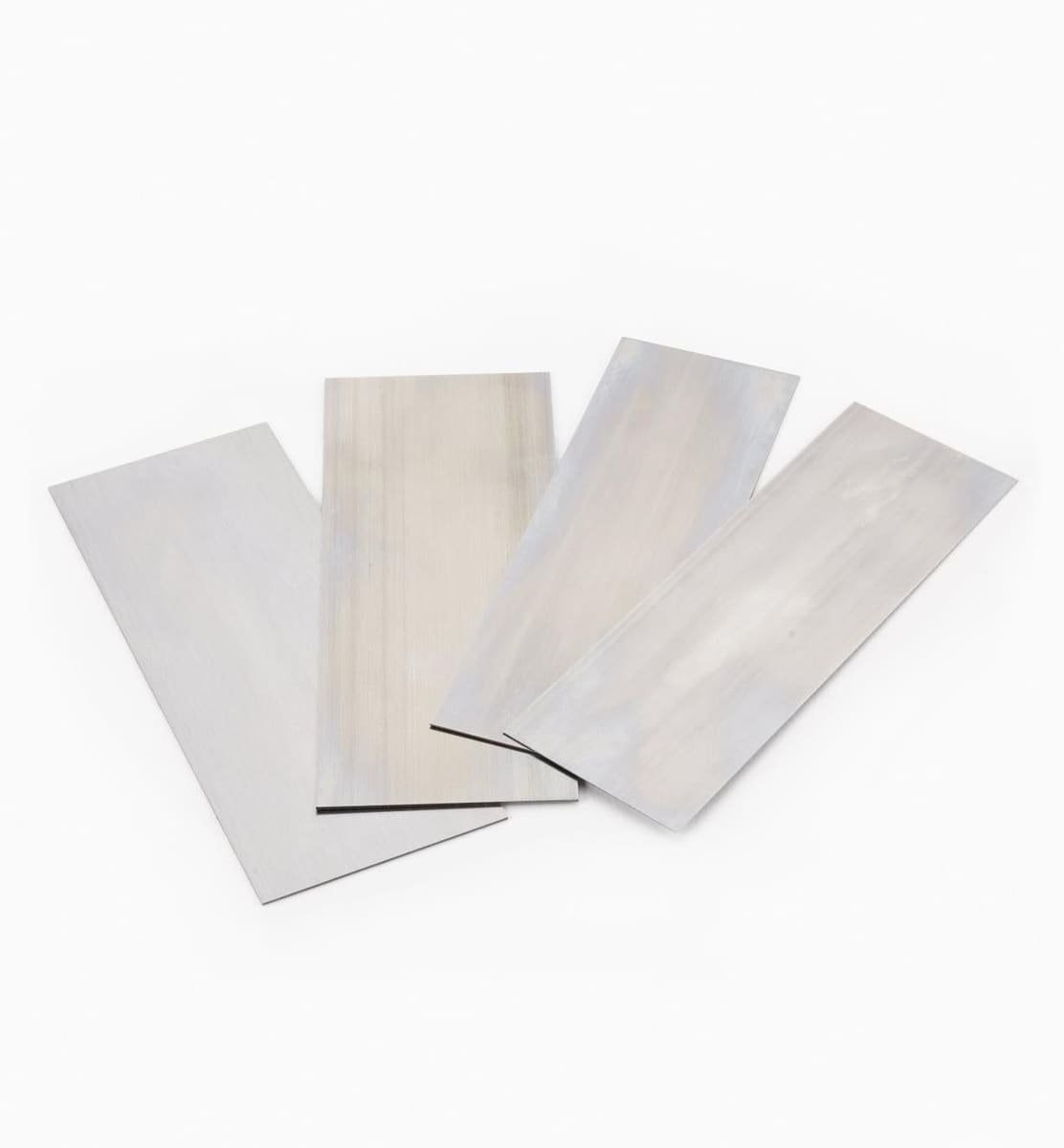
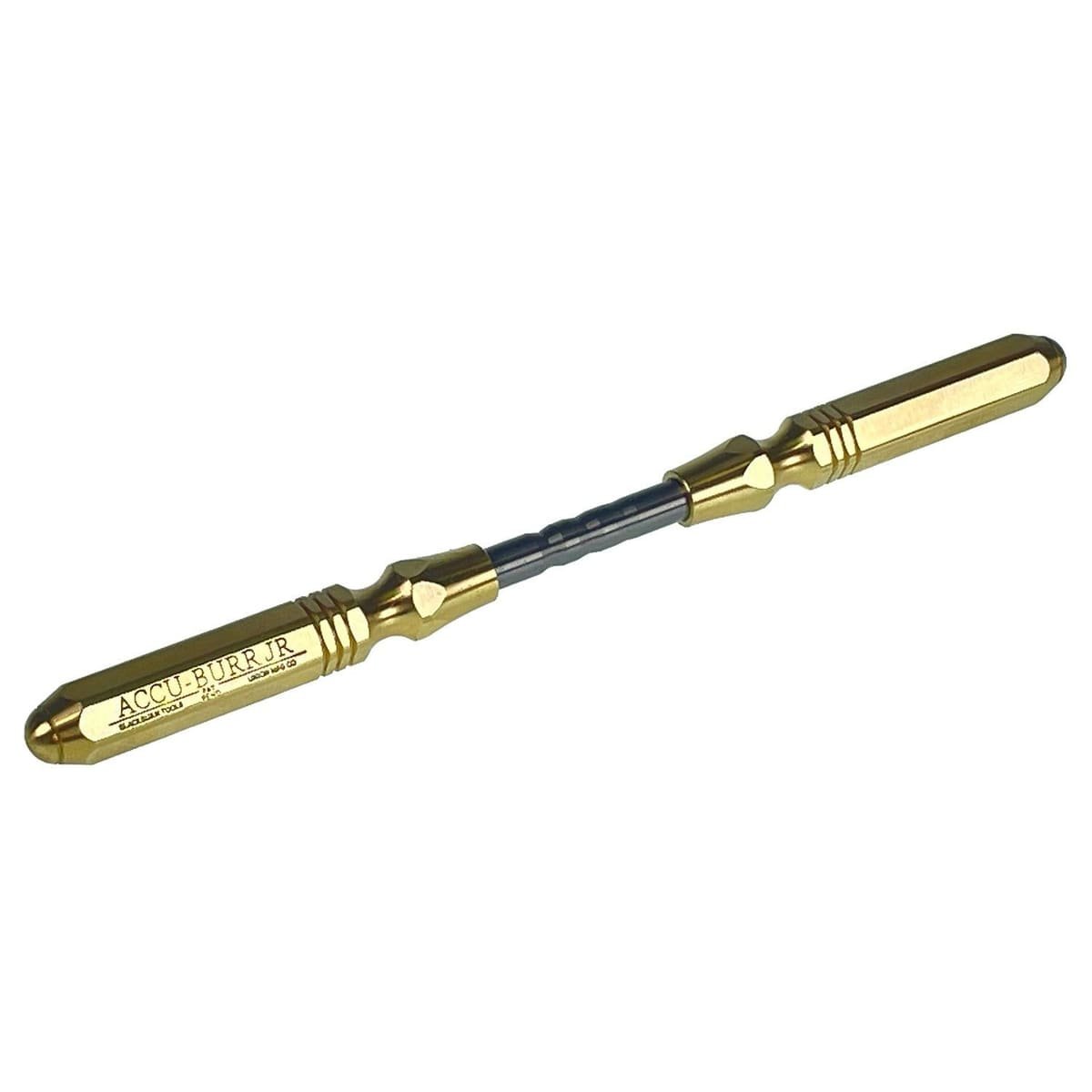
For flat work, the usual shape is a rectangular cabinet scraper such as the Pax set. Run a burnisher along the edge to roll a small hook. No hook, no cut — the scraper just polishes. If you don’t own a burnisher yet, the Accu-Burr is in the catalogue. Hook angle varies from scraper to scraper, so follow the maker’s notes on the card for the steel you bought. You’ll find both under scrapers.
Grip the scraper with both thumbs near the centre, flex it into a slight bow, and push or pull it at a low angle. Bright curls mean the hook is cutting. Dust means the edge has gone dull or you’re holding it too upright.
On thick acrylic that hasn’t fully cured, the scraper skates over the rubbery surface. Give the paint time to harden, then take the ridge off. This is a finishing tool. It won’t strip a failed coating off an entire wall.